How Black students in Missouri called out a toxic campus climate - and inspired a wave of solidarity activism
Tracing an anti-racist movement from the streets of Ferguson to Mizzou to campuses across the U.S. and Canada
“He’s resigned!” someone shouted, and spontaneous dancing broke out in the crowd of around 300 students and professors gathered at the center of the University of Missouri’s Columbia campus (MU), on November 9, 2015. Staff and students alike had tears streaming down their faces.
Tim Wolfe, the president of the University of Missouri system, had announced his resignation following weeks of protest calling out racism on campus and the university administration’s negligence. It was an astonishing display of student power—the outcome of student organizing that included a campus encampment, a hunger strike, and a boycott by the school’s football players that threatened the university’s financial footing. The campaign, led by Black students and involving at least 21 protests on and near campus, would have ramifications far beyond Missouri. It sparked a wave of at least 173 solidarity protests (108 which are in our archive) and anti-racist campus activism that spread across the U.S. and Canada.
A culture of racism and a complicit administration
Racist incidents at “Mizzou,” as the flagship campus is nicknamed, were nothing new. In one of countless incidents and aggressions, two white students dropped balls of cotton outside the Black Culture Center in 2010. Neither was it unusual for the university administration to take a lax approach to responding to these incidents.
On August 9, 2014, a police officer shot and killed Michael Brown, an unarmed Black teenager in Ferguson, Missouri, around 120 miles from Mizzou. Mobilizing by local activists and the Movement for Black Lives changed the conversation about institutional racism in Missouri and nationwide. At MU, three queer Black women formed an activist collective called #MU4MikeBrown.
A year later, on September 12, 2015, the president of the Missouri Students Association Payton Head posted on Facebook about his experiences as a Black student navigating the racist, homophobic, and transphobic campus culture at Mizzou. As reported in the Columbia Missourian, Head recounted a recent incident where students riding in the back of a pickup truck yelled racist slurs at him:
I really just want to know why my simple existence is such a threat to society. … For those of you who wonder why I’m always talking about the importance of inclusion and respect, it’s because I’ve experienced moments like this multiple times at this university, making me not feel included here.
The post was widely shared and started a high-profile conversation about anti-Black racism and bigotry on campus. On September 17, the university Chancellor R. Bowen Loftin issued a statement on “recent incidents of bias and discrimination” which he deemed “totally unacceptable.” He announced that diversity and inclusion training for all students would start in 2016, For concerned students, that wasn’t enough.
Many Black students at Mizzou felt that racist mistreatment was a defining part of their college experience. By their accounts, many white students and the university administration were not simply unaware of this mistreatment–they were actively complicit in it.
"The first time I experienced racism was at Mizzou," an anonymous student later told a meeting of the Griffiths Leadership Society for Women, according to the student newspaper, The Maneater. Another student shared that a white student had spat in her face while she attended a protest. Another said that during a demonstration a resident from a nearby apartment building had leaned out the window and yelled: “You n—- just need to go home."
"Students get served violence on this campus: physical, emotional, spiritual and fucking mental," graduate student Reuben Faloughi told a demonstration that October. “I've been in conversations where Black students have thought about committing suicide - suicide - because they don't belong. They don't feel like they belong."
Many expressed frustration with the university’s inaction. "My freshman year, coming here was a dream," explained one second year student. Referring to the university’s failure to act, they said, “And to have your heart broken by something that was a dream is indescribable.”
Several rallies on campus were held under the banner “Racism Lives Here.” At one of these demonstrations, on October 1, 50 students marched around the Student Center in the middle of campus, holding signs reading: "Are you anti-Racist or nah?" and "#BlackLivesMatter," according to a report by The Maneater.
"Let us be clear that until the administration takes a serious stance on racism on our campus, we will be marching until we are guaranteed justice," said graduate student Danielle Walker, according to The Maneater. "They say they are for the students. Well, we are the students.”
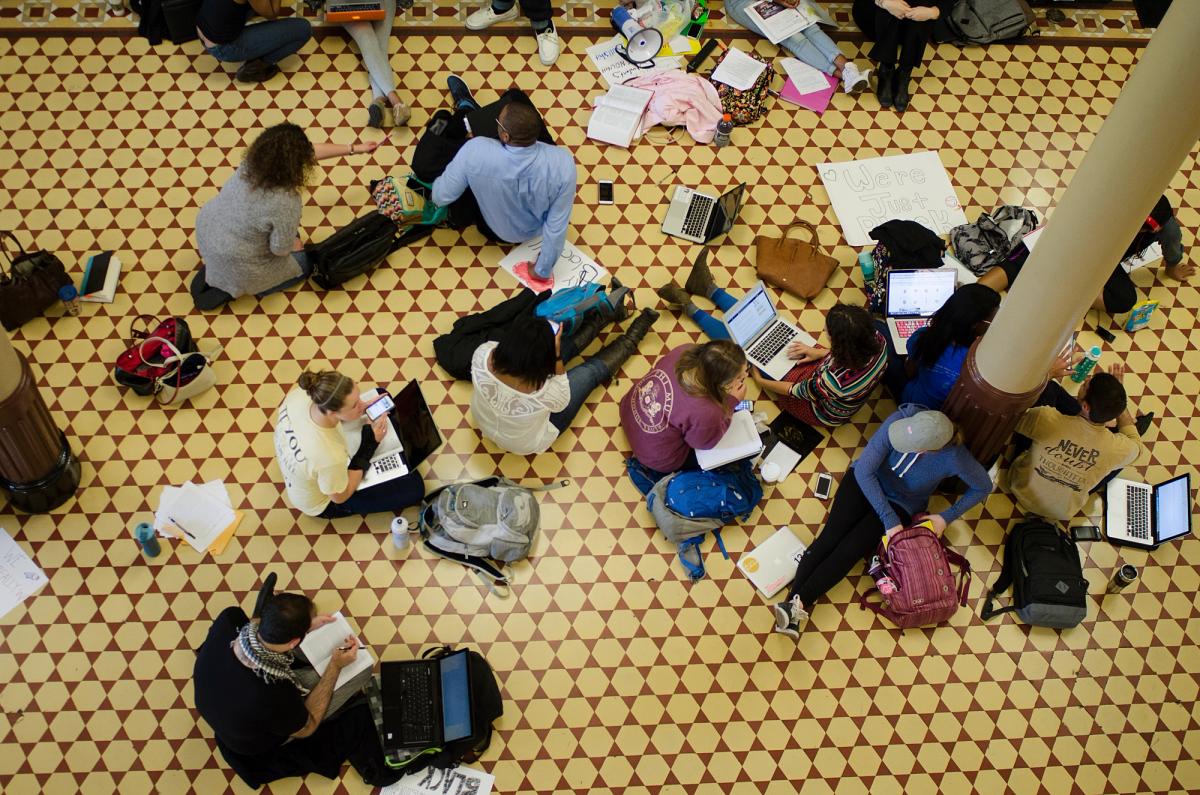
While Mizzou’s racist campus climate was not unique, as revealed by the wave of anti-racist activism this campaign inspired, the university did have a distinct history that defined the 2015 moment. Founded in the mid-1800s when the state’s economy rested on white enslavement of Black and Indigenous people, MU only admitted Black students beginning in 1950. It did not hire a Black faculty member until 1969. In 2015, only 8% of the student body was Black, compared to 12% of the state population overall, the New York Times reported. Black students had the lowest graduation rate of all racial groups on campus, at under 55%, compared with 71% for white students.
How did students mobilize to win?
Black students, including some with the #MU4MikeBrown organization, created Concerned Student 1950, a group they named for the year that Mizzou first admitted Black students. “Obviously, the institution doesn't want to create any policy, any deterrent for these [racist] instances to stop happening," one anonymous organizer told The Maneater. "So, we took it upon ourselves to do some action."
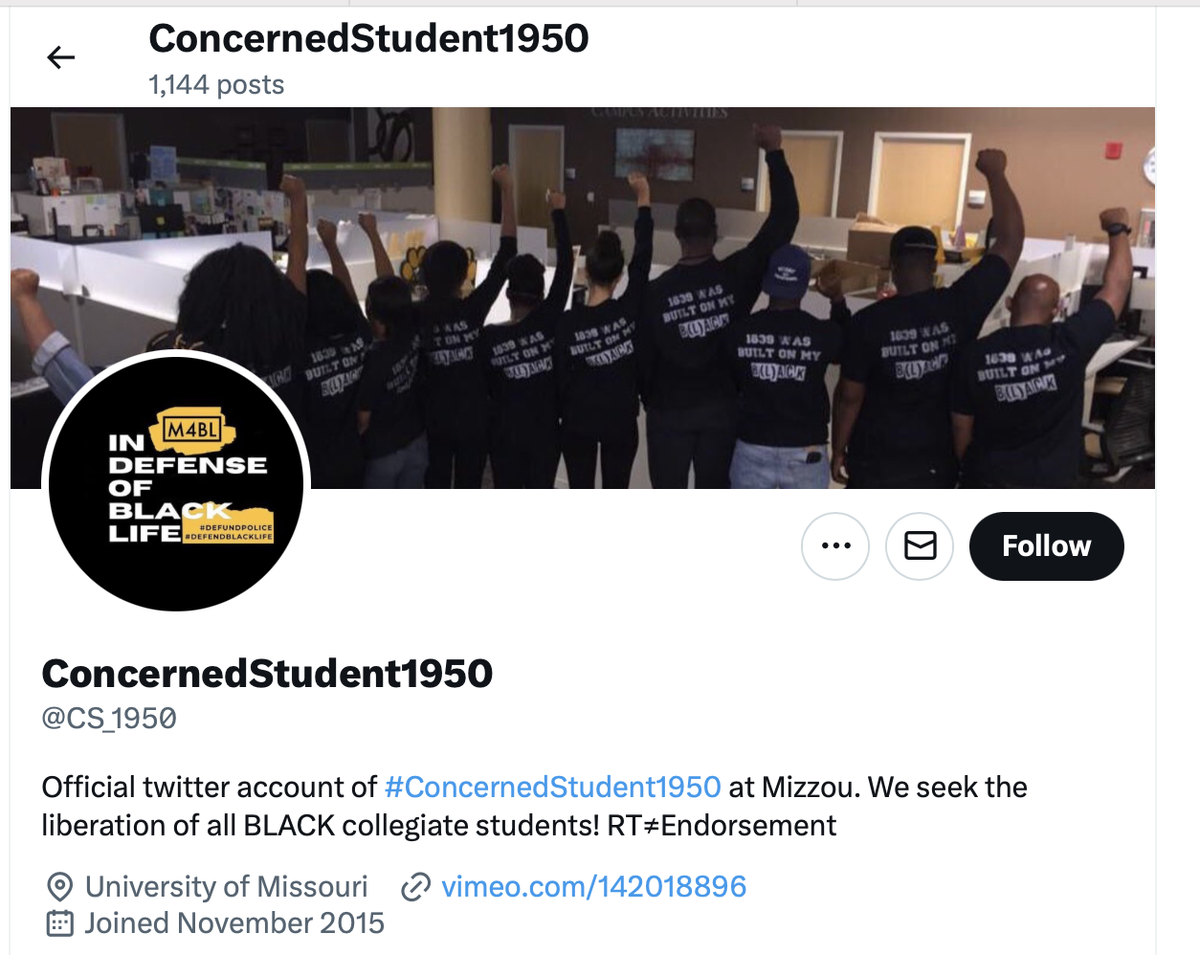
One of the student leaders, Jonathan Butler, referred to the upcoming diversity training as a “step in the right direction” but said the chancellor still had failed to acknowledge the extent of racism on campus.
On October 10, Concerned Student 1950 organized a protest at MU’s homecoming parade that changed the course of its burgeoning campaign and made national news. Following a call to action by student leader Storm Ervin, 10 Black student protestors blocked president Wolfe’s red sports car, which was part of the parade. They all wore black t-shirts with the words: “1839 WAS BUILT ON MY B(L)ACK,” a reference to the founding of the University of Missouri in 1839, using donations from 384 enslavers.
“We stopped him, specifically because after years of constant emailing, letter writing and social media outreach, he had still not responded to the issues of racial injustice on the largest campus in the state," the Legion of Black Collegians said in a statement released after the event.
The protestors interlocked arms and chanted the words of Black freedom fighter Assata Shakur:
It is our duty to fight for our freedom
It is our duty to win
We must love and support each other
We have nothing to lose but our chains.
Wolfe stayed seated in his car and did not speak to the protestors—something he later apologized for—and officers from the Columbia Police Department broke up the protest. Later, Head posted online that Wolfe had “smiled and laughed” at them. “In our faces,” he wrote, addressing Mizzou students. “This is your president. This is America. 2015.”
Ten days later Concerned Student 1950 issued a list of demands to the administration, including a public apology from Wolfe, his removal as president, and the creation of a comprehensive racial awareness and inclusion curriculum throughout all campus departments and units, which would be mandatory for all students, faculty, staff, and administration. They also demanded that the university hire more Black faculty members and work to increase the retention rates of Black students.
“The Black experience on Mizzou’s campus is cornered in offices and rarely attended to until it reaches media,” Concerned Student 1950 wrote in an introduction to their demands. “Then, and only then, do campus administrators seek reactionary initiatives to attest to the realities of oppressed students, faculty, and staff. These temporary adjustments to the university’s behaviors are not enough to assure that future generations of marginalized students will have a safe and inclusive learning experience during their time at Mizzou.”
Shortly after Concerned Student 1950 released its demands, someone drew a swastika on the floor and wall of a residence hall using human excrement, further inflaming anger on campus. On October 26, student organizers had a private meeting with Wolfe, after which he said publicly that “racism is unacceptable,” But he did not offer a concrete plan to address racism on campus.
Students escalate the pressure
To challenge the administration’s tepid responses, Butler announced on Facebook that he was beginning a hunger strike:
Mr. Wolfe had ample opportunity to create policies and reform that could shift the culture of Mizzou in a positive direction but in each scenario he failed to do so. … What you should consider is what your legacy will be after this point, a legacy of progress and inclusion or a legacy of hatred, racism, and bigotry. My hope is that you will choose the former and not the latter.
Two days later, students began a boycott in support of Butler, and Concerned Student 1950 organized a walk-out. Anonymously, some other students pushed back against Butler and the antiracist protests, posting racist messages on the then-popular app Yik Yak. Wolfe offered an apology to students, saying that racism was a “long-standing, systemic problem which daily affects our family of students, faculty and staff.” However, when asked that night what “systematic oppression” was, Wolfe gave another frustrating answer. “It’s – systematic oppression is because you don’t believe that you have the equal opportunity for success,” he said. Wolfe had once again made clear to the student activists that the administration did not understand racism as a systemic problem.
In response, students set up tents in Carnahan Quadrangle, creating a space where people could learn about Butler’s strike and the experiences of Black students on campus. Recalling this period, Faloughi, a founding member of Concerned Student 1950, told The Maneater, “Some of the most beautiful moments I had as a University of Missouri student came during the hunger strike, because it’s like the hunger strike rallied students together. ... That outpour of love was some of the most connecting moments I had as a student.”
On November 7, five days into Butler’s hunger strike, the campaign took a stunning turn that catapulted its demands into the national spotlight. Black football players at Mizzou joined the fight. Defensive back Anthony Sherrils tweeted a photo with Jonathan and 30 of the Tiger’s Black football players, “Our struggle may look different, but we are all connected.”
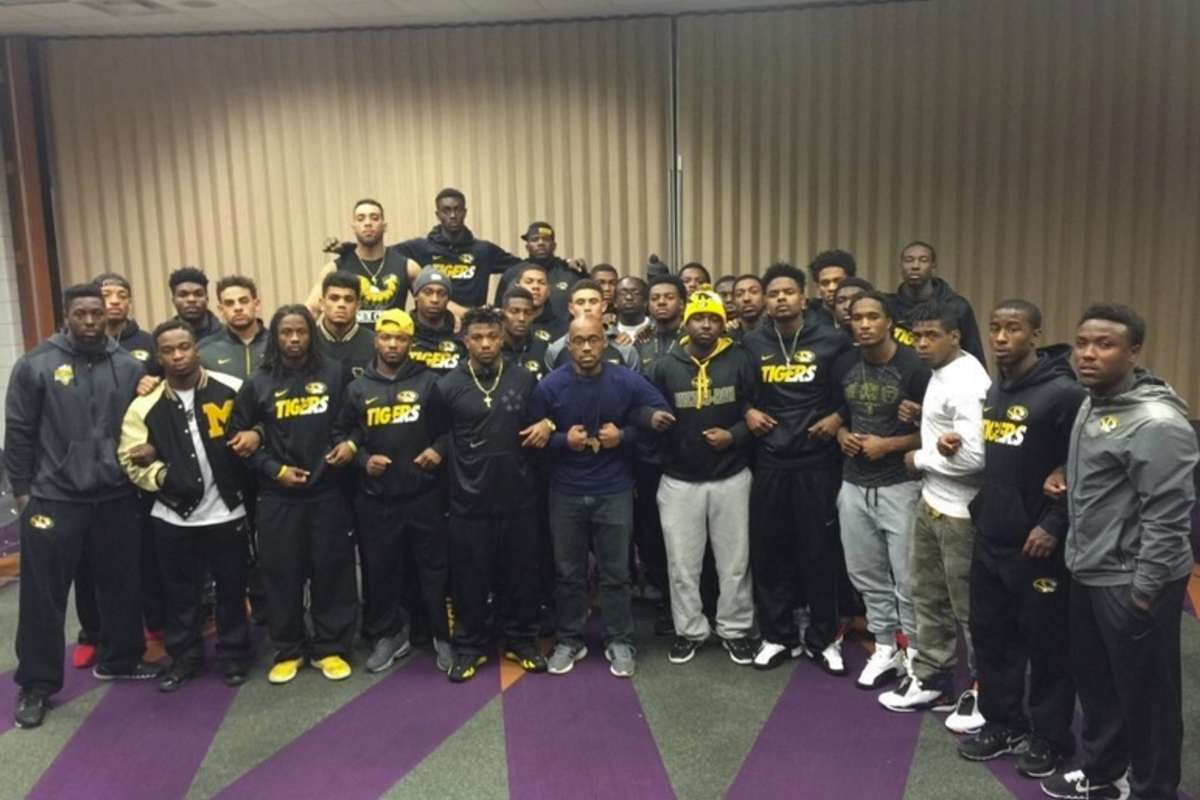
“The athletes of color on the University of Missouri football team truly believe ‘Injustice Anywhere is a threat to Justice Everywhere’,” Sherills wrote. “We will no longer participate in any football related activities until President Tim Wolfe resigns.”
Coach Gary Pinkel then tweeted a picture of the entire football team, white players and coaches included, with the words: “The Mizzou Family stands as one. We are united. We are behind our players. #ConcernedStudent1950.”
This powerful gesture came from two of the most influential segments of the campus community, with tremendous leverage: football players and football coaches. The players were scheduled for a game against Brigham Young University that Saturday. “Not playing the game would likely have had adverse season implications for both teams, and Missouri would have had to pay BYU $1 million for forfeiting,” The Daily Universe, BYU’s student newspaper, reported. The football player boycott left the university administration in an untenable position.
The very next day, on November 9, as MU students and faculty once again gathered in protest on Carnahan Quad, the big news finally came. Wolfe and Loftin had resigned. Missouri’s Governor Jay Nixon described Wolfe's resignation as "a necessary step toward healing and reconciliation on the University of Missouri campus.”
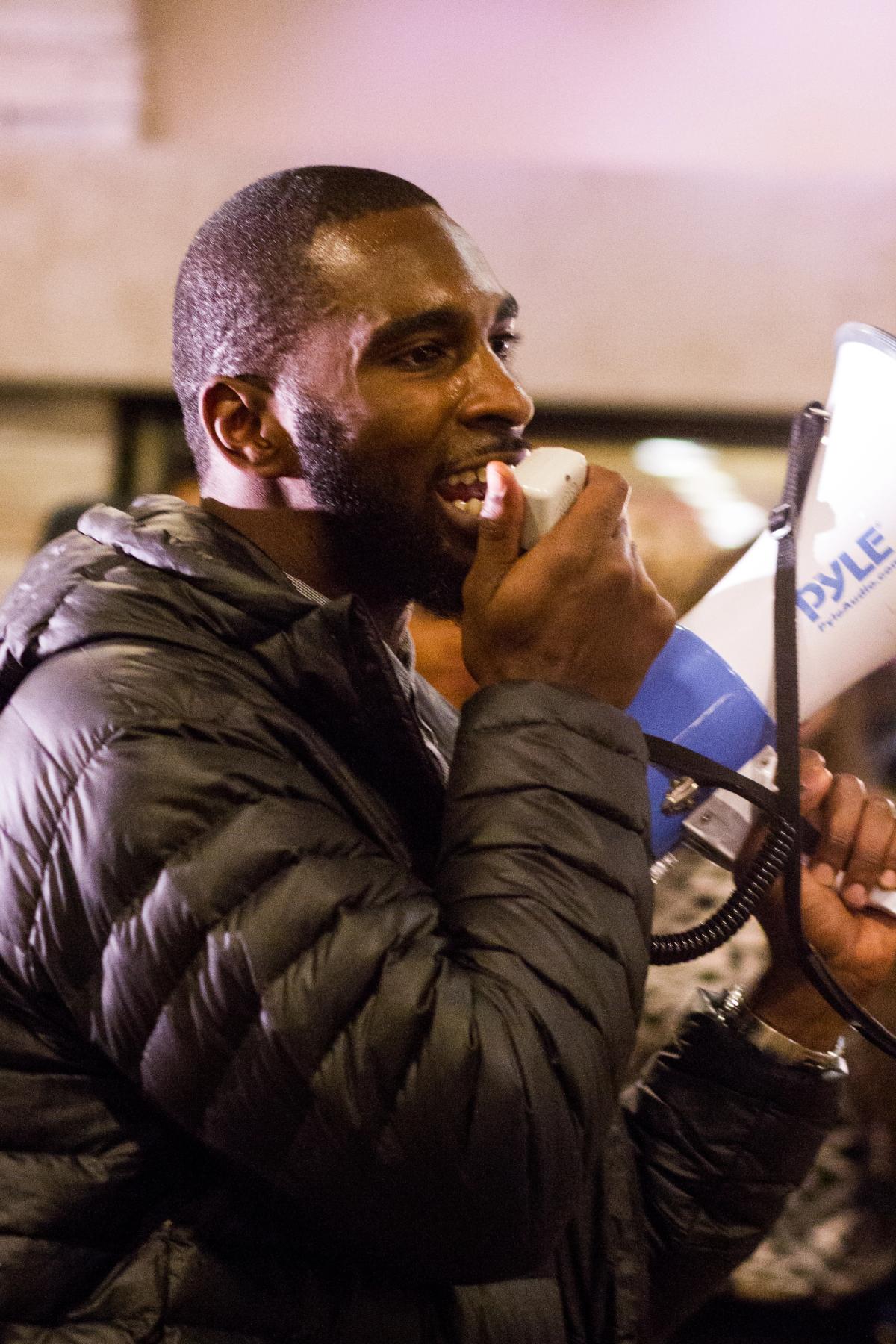
This victory led to some substantive changes at the institution. In 2016, Mizzou hired its first chief diversity, equity and inclusion officer. However, the backlash was quick and fierce, coming from the Republican-controlled state legislature, influential funders and alumni, and media outlets. Student enrollments also dropped sharply, though temporarily, especially for Black students.
Backlash against modest gains
Fast forward to the current day: in Missouri and across the country, the right-wing pushback against racial integration and antiracist action accelerated with the second presidential election of Donald Trump. Between 2024 and 2025, the Missouri legislature introduced thirteen bills to slash public diversity, equity, and inclusion programs, according to the Columbia Missourian.
In 2024, UM System President Mun Choi dissolved the university’s DEI division and, with it, the position that students had fought for. Choi later explained that this move helped to stop the anti-DEI bills from passing, but the university did not stop there. It changed homecoming parade rules to ban political content, deleted resource websites for minority students, and then defunded the Legion of Black Collegians, the campuses’ Black student governing body, citing a Department of Justice memo restricting DEI.
As the Columbia Missourian reported, Isleen Atallah, a student activist, understood these actions as the university’s legacy of failing its Black and Brown students: “It was still terrible pre-dismantling of the DEI [division], but it’s just making it official that we are a racist institution.”
A wave of solidarity activism against campus racism
Despite political backlash, Concerned Student 1950’s campaign had consequences far beyond the Mizzou campus. A crucial and under-recognized win for the campaign was the movement organizing it inspired from Boston to Tennessee to Toronto. In November and December 2015, there were at least 173 Mizzou solidarity protests across the U.S. and Canada, according to HiPED and the HiPED Lab’s counts of additional sources. The wave of student protests in solidarity with Mizzou was extraordinary. This was one of the crucial impacts of the student campaign at Mizzou, with ripple effects far beyond Missouri.
These solidarity protests and campaigns, often led by Black students, highlighted students’ solidarity with Mizzou students while also centering problems of deep-seated racism and administrative failure on their own campuses. Many followed the lead of Concerned Student 1950 and a tradition of antiracist student activism in the U.S. by issuing pointed lists of demands to their administrations.
This wave of protest was buoyed by national student organizing. Students created the Black Liberation Collective, which coordinated events like the November 18, 2015 #StudentBlackOut day of protests, with tens of thousands of students mobilizing at University of California, Berkeley, University of Cincinnati, Morehouse, Spelman, Yale, Harvard, Michigan State University, Wesleyan University, and many more schools. In Canada, students formed Black Liberation Collective-Canada and organized a day of action that spanned the country, from the University of British Columbia to the University of Ottawa.
The Black Liberation Collective also published a central website with Black students’ lists of demands, representing 85 colleges and universities in 28 states, the District of Columbia and Canada. Importantly, the University of Missouri list of demands came first, signaling the centrality of that campus campaign for the wave of anti-racist activism occurring in the fall of 2015.
Many of these campaigns led to institutional change. At Ithaca College in New York, students secured the appointment of a new chief diversity officer. At Claremont McKenna College in California, protests led a dean to resign. The fact that students at Mizzou had successfully pushed top leaders to resign, in a very high-profile way, no doubt gave students at other schools more leverage. And all of this activism and the Black Liberation Collective demands website brought media attention to the core problem that Mizzou students exposed: university leaders have failed to create environments where Black and Brown students can thrive.
Halifu Osumare, a professor of African-American and African studies at the University of California, Davis, told the Guardian that the movement that began in Missouri had mobilized an entire generation of students.
The millennial generation is now finding its voice in terms of the growing issue of racism in America. I think we’re going to see a new student movement. There’s been a history of student activism around civil rights and those issues have not gone away.
Ten years after the events of 2015, Faloughi reflected on the legacy of the Concerned Student 1950 organizing in an interview with The Maneater. Asked to give advice to student activists today, Faloughi said: “If you want something to change, do it yourself.”
Take-aways for activists
- Perform a power analysis and understand how stopping particular programs can more forcefully extract a demand from the institution.
- Solidarity campaigns are not only a way to show support from afar; they are a mechanism for raising up concerns on your own campus.
- As Frederick Douglass famously said, “Power concedes nothing without a demand.” Outlining specific demands operate both as an organizing tool and as a benchmark to measure wins. Depending on your campaign, those demands can emerge from your own campus or can be drawn from other, similar movements at other campuses.